Developer: Thunder Lotus Games
Publisher: Annapurna Interactive
Format: PC, PS4, Nintendo Switch (Tested), Xbox One, Google Stadia
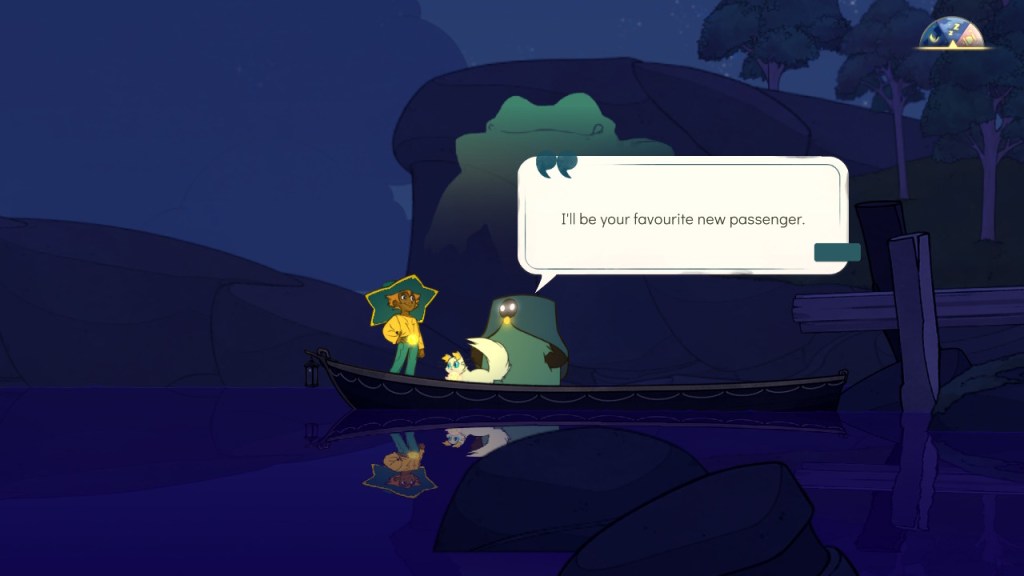
It’s a tale as old as time. Death, no longer wishing to be the one who ushers spirits from this world to the next, has decided to pass on his responsibilities to someone else. It’s a concept that has appeared in multiple forms, from Terry Pratchett’s novel Mort to the Family Guy episode Death is a Bitch. But while Pratchett used the idea to portray Death as a kindly character, and Family Guy used it to tell frat guy jokes, Spiritfarer uses the concept to explore some entirely different themes.
When we die, how do we move on from those we leave behind?
Developed by Thunder Lotus Games, Spiritfarer tells the story of Stella, a young woman who inherits the role of Spiritfarer after Charon decides to retire. As the Spiritfarer, Stella will sail around the world, collecting the souls of the recently deceased and ensuring that they are ready to move on from this world. When they are ready, Stella will take the spirits to the Everdoor, where they will pass on to whatever awaits them.
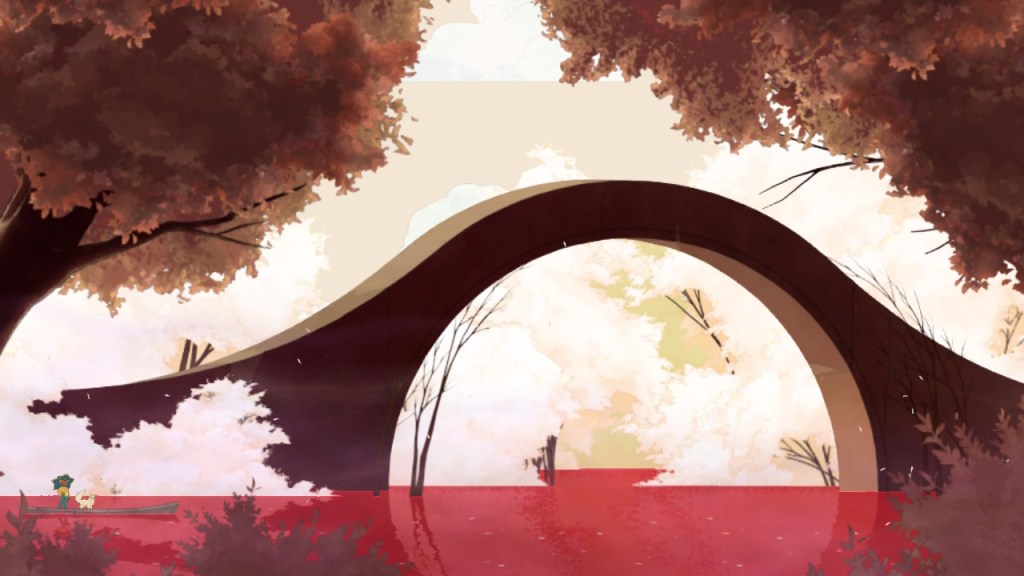
However, before the spirits can move on they need a variety of odd jobs completed for them. This means taking on quests, planting crops, cooking food, building and improving houses, converting resources into other resources, hugging and feeding the spirits, upgrading your boat, and much more. If that list looks daunting, then I’ve got bad news for you; this isn’t the game for you. As a farming/management sim, Spiritfarer requires the player to do a lot of plate spinning if they want to complete their goals.
But the game doesn’t solely take place on your boat or alongside your spirits. No, Stella will often disembark from the boat to explore the numerous islands that dot the world, collecting resources, finding Glims -the game’s main form of currency- and meeting with the various people who exist in a form of limbo between life and death. Some of those people will join Stella on her voyages, taking the form of the animal-like spirits on her boat, but most of them simply have amusing dialogue or bonus quests that can be completed. Some of the islands also house shrines that can be used to upgrade Stella’s abilities, allowing her to double jump, or glide, or to use zip lines.
The way Stella moves is actually one of the best parts of the game. It would have been easy for the game to make her jumps or the way she moves feel either too heavy or light, resulting in her feeling like she was either overly sluggish or constantly ice-skating respectively. But Spiritfarer manages to find a great balance. While it seems strange to compliment a game on how nice it is to walk around in its world, you will be doing a lot of traversing in Spiritfarer, and making it feel right was definitely an important thing for the developers to focus on.
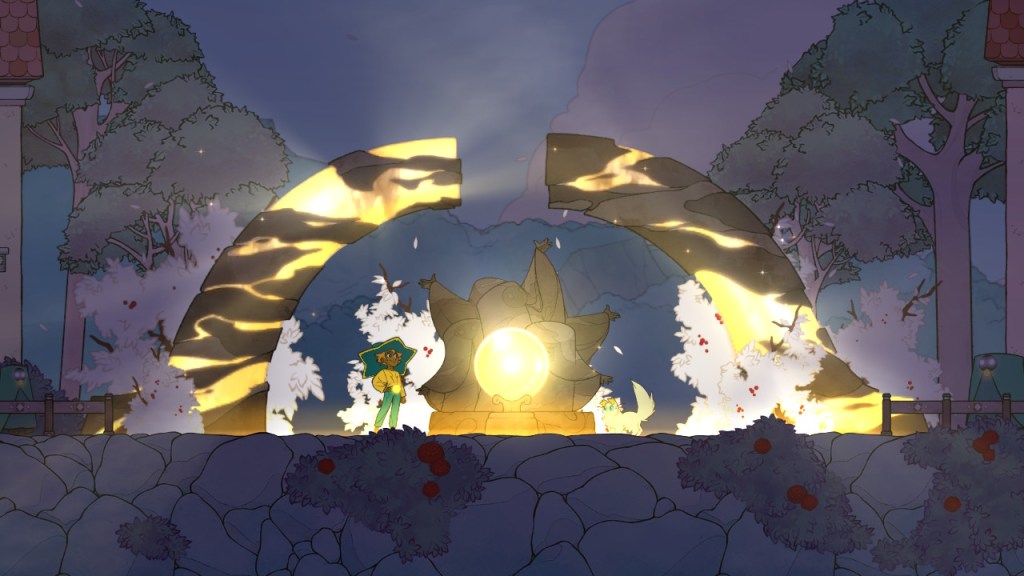
But I don’t just like the way the game feels to play, I’m also enraptured by Spiritfarer’s overall tone as well. The game is incredibly charming. Take the soundtrack, which manages to shift tones from peacefully tranquil to Dark Souls-esque bombast with ease, and which I’ve been listening to non-stop as I write this review.
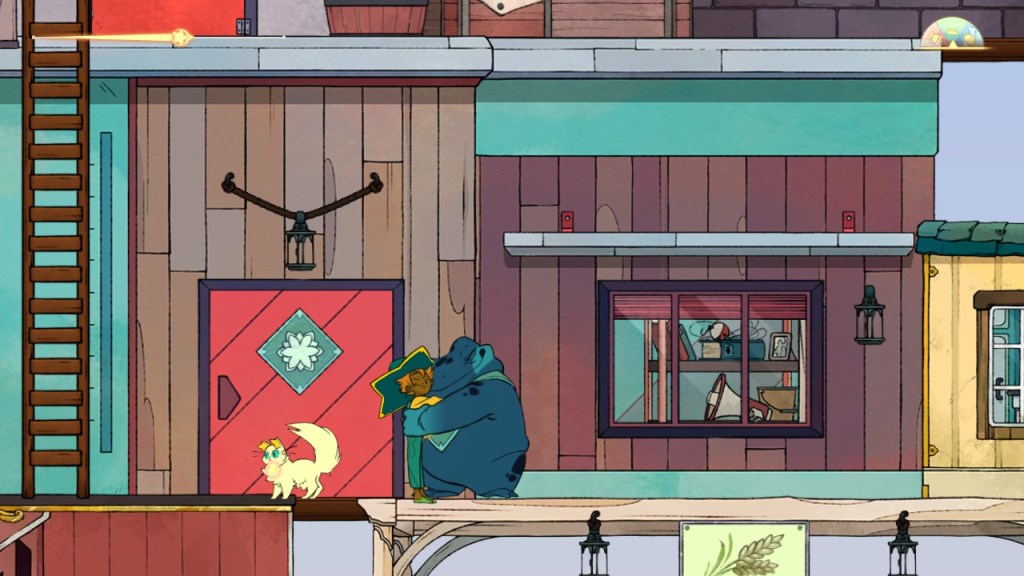
Alternatively, look at how the game, well, looks. Spiritfarer’s animation and art style are simply gorgeous to look at. The animation, in particular, deserves mention as the game uses lots of frames, meaning that every animation -every movement, idle animation and conversation- looks incredible. Aiding these animations are Spiritfarer‘s character designs, all of which are unbelievably charming. From Gwen, a reindeer who looks like she’s wearing a mink coat, to Atul, a delightfully rotund frog, the way that the spirits who inhabit your boat look are probably one of the best parts of the game, showcasing both the imagination of the developers, but also the personalities of the characters. I loved Stella’s design in particular; an incredibly sweet depiction of a young girl that seemed reminiscent of the work of artist Molly Ostertag or the titular character from the animated show Kipo and the Age of Wonderbeasts.
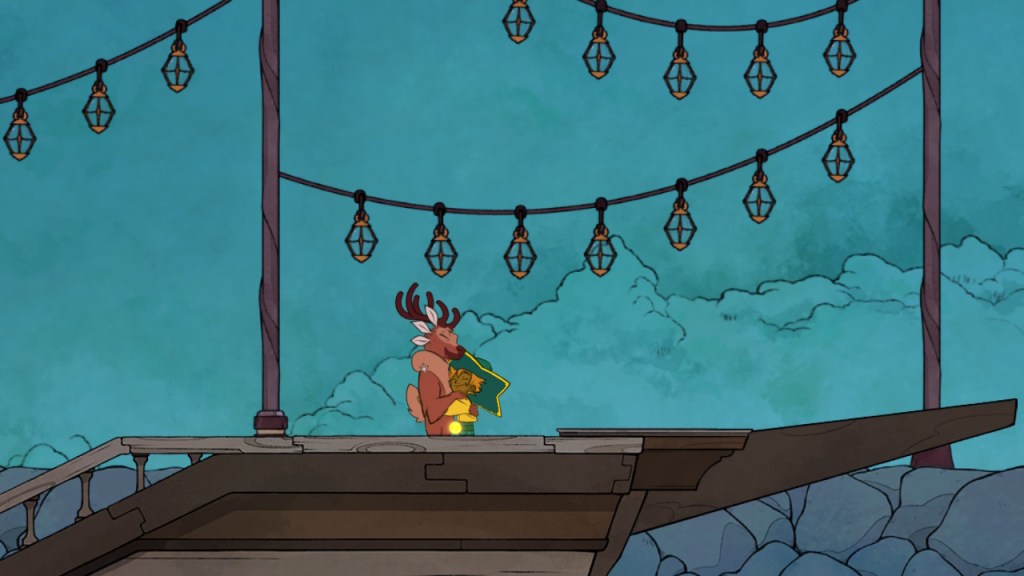
But for all the game’s charm, there are still some glaring issues, with one of the most prominent issues being length. As I mentioned above, Spiritfarer’s animations are all lovely, but they tend to go on for far too long. Whether it is Stella falling over after misjudging the weight of a pickaxe or celebrating after catching a fish, several of the animations have too many frames where nothing is happening and the player is stuck with nothing to do. Ironically, the one animation that players would want to be longer, that of Stella hugging the various spirits, is the probably shortest animation in the game.
Speaking of length, don’t expect Spiritfarer to be a game that you could breeze through during a weekend. The trailers for the game make it easy to think that Spiritfarer will be a short game, an experience that will last about 10 hours or so. That isn’t the case; I’ve already poured 10 hours into the game and am nowhere near close to completion. In fact, estimates suggest that the game can take up to 30 hours to complete, or over 40 hours to see everything. While I don’t find Spiritfarer’s length to be an issue -I personally find the game charming enough to justify spending an extended period of time with it- I do know that some people will expect a shorter experience and won’t be able to commit as much time into Spiritfarer as the game asks.
And while Spiritfarer will ask the player for a considerable time commitment, the spirits will ask for a lot more. The management simulation part of the game is incredibly demanding, especially when it comes to feeding the spirits. Each spirit has certain food types -such as comfort, exotic, plain or fine dining- that they do or do not like, with the spirits refusing to eat any food that belongs in their disliked food group. While this isn’t a massive inconvenience, things are further complicated by the fact that spirits won’t eat the same food twice; they will not eat two bowls of rice or drink two cups of tea in a row. This isn’t much of a problem in the late game, where you have an upgraded kitchen and plenty of food, but in the early game, this led to issues with keeping the spirits properly fed as I only had a few food items on me. One particularly frustrating spirit refused to eat fruit, which the player can find vast quantities of in the early game, meaning that I had to cycle between giving her either coffee or popcorn until I could find something else she liked.
But the spirits don’t stop their demands there. Whenever they gave me a new quest to complete, I would then get almost constant reminders about said quests. One character would always mention that he was waiting for me to cook him a bucket of fried chicken, despite the fact that I didn’t know where to get some of the ingredients for the dish.
These constant demands only get worse when the spirits try to talk to Stella about their previous lives. While other video games would save this information for cut-scenes or dedicated quests, and while Spiritfarer does occasionally do just that, the rest of the time the spirits will talk about their past whenever they damn well feel like it. The game doesn’t give any indication that it’s about to drop a large amount of exposition and important information at the player’s feet. It’s odd that the spirits will occasionally tell you their life story when you talk to them, especially since there is just as large a chance that they will tell Stella that they are hungry, or that they don’t like the rain.
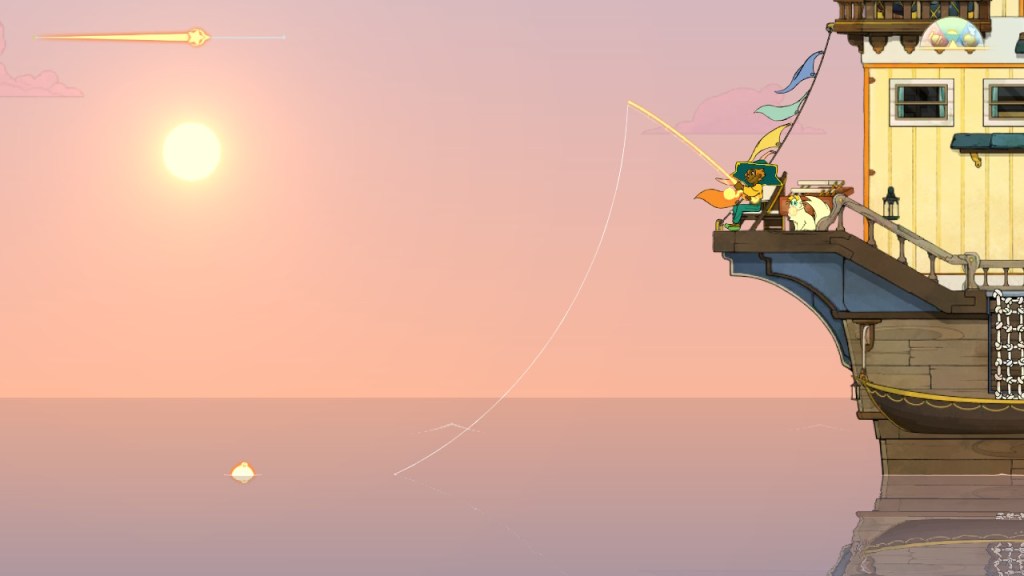
But do these downsides ruin Spiritfarer? Do they completely tarnish an otherwise charming game? Not completely, no. Spiritfarer is a game that does have some downsides and several strange design decisions, but ultimately I liked the game. The gorgeous art design and charming animations go a long way in informing my opinion on Spiritfarer, but the characters are also incredibly well written. From a vegan snake and an art-collector hawk to a shark who makes the worst puns I’ve heard in a while, I’ve fallen in love with the game’s characters. The game deals with serious themes, including depression, Alzheimer’s, forgiveness and loss, in a mature, tear-jerking way, and having to say goodbye to the individual spirits when their journeys were complete was an utterly heartbreaking experience.
Spiritfarer is a game that I have developed a deep love for. While it might not stand up to repeat playthroughs, it is a game that I can see myself recommending for a long time, if only because it serves as a great reminder that you should hug the people you love before they’re gone.
 Correspondence From Limbo
Leave a comment